Isabella Ford presentation now available

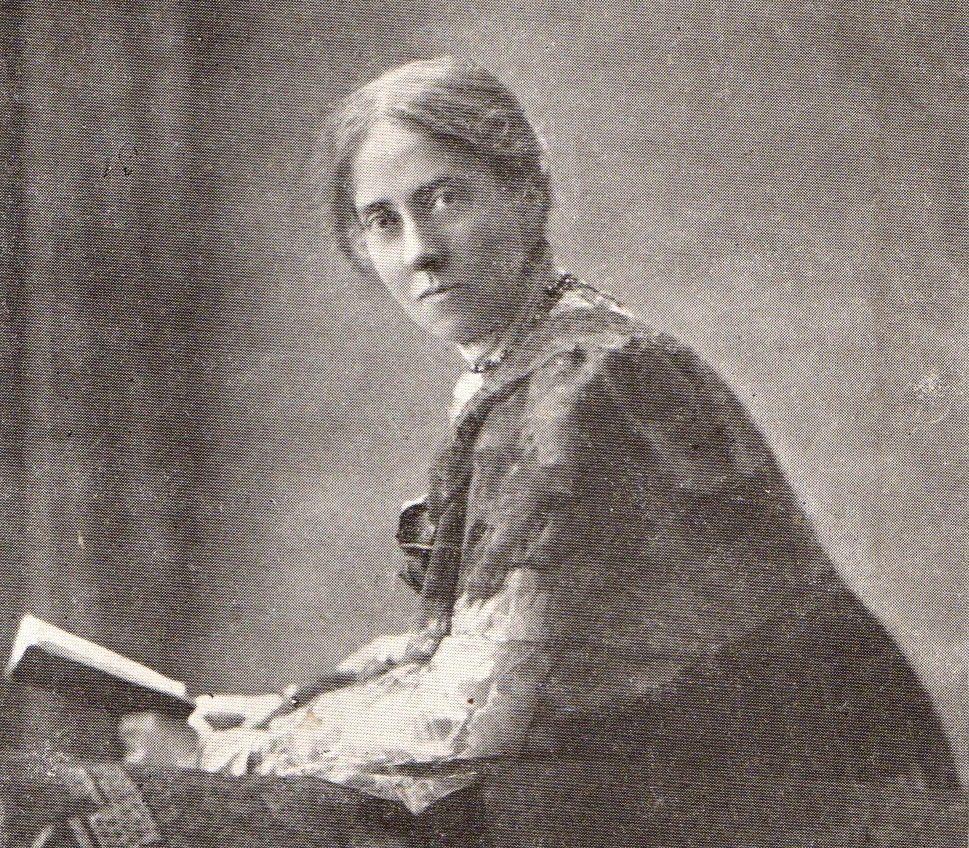
We were delighted that so many people turned out to hear June Hannam’s talk on Isabella Ford which was very informative and entertaining. June’s book on Isabella is no longer in print but she has shared her presentation with us which you can view below. If you prefer to download it click here.

Our next events:

April: Rock against Racism – a talk by Paul Furness

May: Centenary of the General strike – a guided walk around Leeds

September: The battle of Holbeck Moor – a meeting to celebrate Leeds’s antifascist history

Attendance of our public events are usually without charge, as is membership of the Society. However our work is financed solely by the contributions of our members and supporters. All donations are gratefully received. If you’re able to, please make a donation direct to our bank account.

Ford Maguire Society
Virgin Money
82-12-08
00184472

Please follow us on Facebook (Leeds Ford-Maguire Society)

For further information: Tony Maguire 079503647612

Unions’ Struggling with Computers: the multi-faceted relationship with computers in the 20th century 

Dr. Steve Walker will be talking about how trade unions have responded to and used computers from the 1950s to the present day.

Venue: The Hall, Swarthmore Centre, 2-7 Woodhouse Square, Leeds LS3 1AD
Date: 23rd April 2025 7.00pm-8.30pm

Workers were among the very first to encounter computers as they emerged from the military into the workplace. Unions debated the significance from their emergence in the 1950s through the 1960s and beyond. In the late 1960s unions began to use computers to support their own administration and research activities, with implications for their own organisation. In the workplace post-60s radicalism led to attempts not just to resist new technologies but also to shape their use as part of more humane workplaces and contributing to socially useful production. Some of their ideas went on to inform more radical technology policies among local authorities, most notably the GLC.

The appearance in the late 1970s of the ‘microchip’ initiated another round of concern about their implications for work and jobs. The personal computer and communications devices also created opportunities for unions, initially in international work; by the 1990s labour networks were becoming widespread globally, highlighted by the Electronic Communications and the Labour Movement conference in Manchester in 1992 with participants from across the international labour movement. This talk will sketch this history as a basis for discussion of our experiences.

Dr. Steve Walker, who recently retired from the OU has worked as both a practitioner and an academic with technologies in trade unions and other social organisations. He was founder and for 10 years, a member of the worker co-operative operating the Poptel and Manchester Host networks. As an academic he was evaluator for a series of European projects lead by ETUC Education exploring international distance trade union education.